Physical photos are some of the most precious items we own. They hold stories, emotions, and pieces of our family history that can’t be replaced. But paper, ink, and early photo processes are fragile — and without proper storage, even well‑loved photos can fade, curl, or become damaged over time.
The good news is that you don’t need a museum‑grade archive to keep your photos safe. With a few thoughtful steps, you can protect your collection for decades to come.
🌤️ 1. Choose a Stable Environment
Photos are sensitive to temperature and humidity. The safest place to store them is somewhere:
- Cool
- Dry
- Dark
- Consistent in temperature
Best locations:
A bedroom closet, interior cabinet, or dedicated storage box on a shelf.
Avoid: Attics, garages, basements, and storage units — these spaces often experience heat, moisture, and pests.
📦 2. Use Archival‑Safe Storage Materials
The materials you store your photos in matter just as much as the environment.
Look for:
- Acid‑free boxes
- Lignin‑free folders or envelopes
- Archival‑safe photo sleeves
- Polypropylene or polyester (Mylar) protectors
Avoid PVC plastics, old magnetic “sticky” albums, and anything with a strong chemical smell.
🖼️ 3. Handle Photos with Clean, Dry Hands
Oils and moisture from skin can leave marks or accelerate deterioration.
You can:
- Wash and dry your hands before handling
- Use cotton gloves for very old or fragile photos
- Hold photos by the edges
A little care goes a long way.
📚 4. Store Photos Upright or Flat — Not Loose
Loose photos can bend, curl, or rub against each other.
Better options include:
- Storing them upright in archival boxes
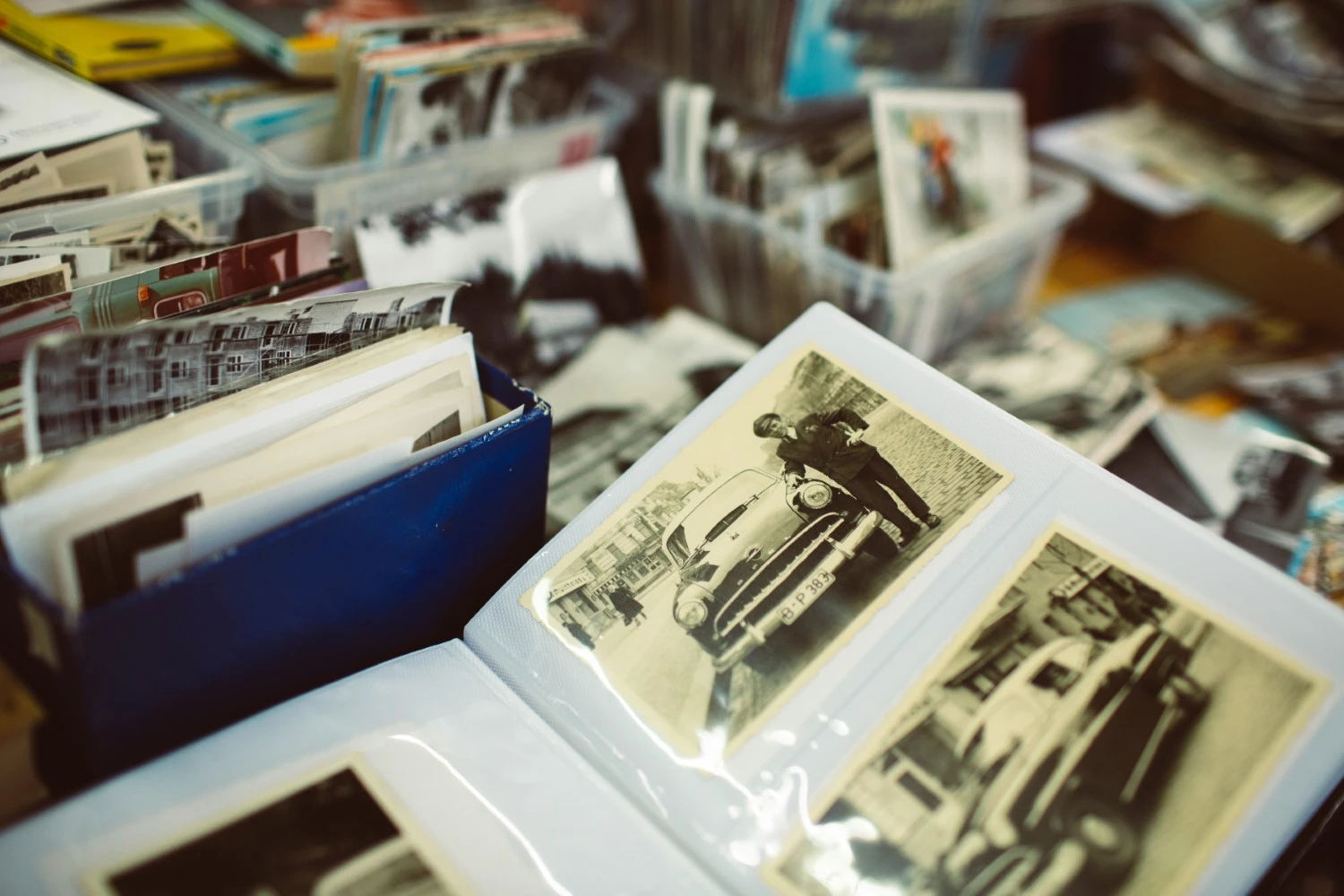
- Keeping them flat in albums or sleeves
- Using dividers to separate decades or family branches
This keeps everything organized and protected.
🧲 5. Avoid Old Magnetic Albums
Those “sticky” albums from the 70s–90s can cause:
- Adhesive damage
- Yellowing
- Chemical staining
- Permanent sticking
If photos are already inside one, don’t force them out. They can be safely scanned in place.
🌞 6. Keep Photos Away from Light
Sunlight and fluorescent lighting can cause fading and discoloration.
If you display photos:
- Use UV‑protective glass
- Hang them away from direct sunlight
- Keep originals stored safely and display a copy instead
This preserves the true colors of your memories.
🧹 7. Don’t Try to Clean Photos with Household Products
Water, cleaners, and paper towels can cause irreversible damage.
If a photo has:
- Dust
- Light debris
- Surface particles
You can gently brush it with a soft, clean microfiber cloth. Anything more serious — mold, stuck photos, water damage — should be handled by a professional.
🔄 8. Digitize for Long‑Term Protection
Even with perfect storage, physical photos will continue to age. Digitizing them:
- Creates a permanent backup
- Protects against loss from fire, water, or accidents
- Makes sharing with family easy
- Allows for gentle restoration if needed
Digitization is the best way to ensure your memories survive for future generations.
💛 9. Keep a Simple Inventory
You don’t need a detailed catalog — even a basic list helps you stay organized.
Try noting:
- How many albums you have
- Which decades or family branches they cover
- Any fragile or priority items
This makes future digitization or restoration projects much easier.
🌿 Your Family Memories Deserve to Be Protected
Storing your photos safely is one of the most meaningful ways to honor your family’s story. With a little care and the right materials, you can preserve these irreplaceable moments for decades to come.